Sound: 


Value:
(Read about our ratings)
Welcome back, my friends, to the show that never ends. Well, OK, this is the end. The end, that is, of this four-part series looking at the flagship noise-canceling earbuds from Apple, Bose, and now Sony. It started with some airborne extended testing while I was flying across the Pacific. For all the details about the noise-canceling performance of all three, check out that article. Spoiler: these Sonys were the best of that impressive bunch.
I tested and liked, but didn’t love, the predecessors to these earbuds, the WF-1000XM5s. But I loved the XM5s’ predecessors, the XM4s, so much so that I gave them a fond sendoff when their batteries inevitably died. Their demise started me on a hunt for replacements. A tall order, requiring great noise canceling as well as a sound profile that would make me want to listen to them for hours and hours. The tiny XM4s went with me everywhere, and I was sorry to see them go.
Priced at US$329.99, CA$429.95, £249, €299.99 as of this writing in early May, the new XM6 earphones are a bit more expensive than their predecessors, and also more than the latest offerings from Bose and Apple. They also feature some rather controversial design decisions, but we’ll get to that.
In the box
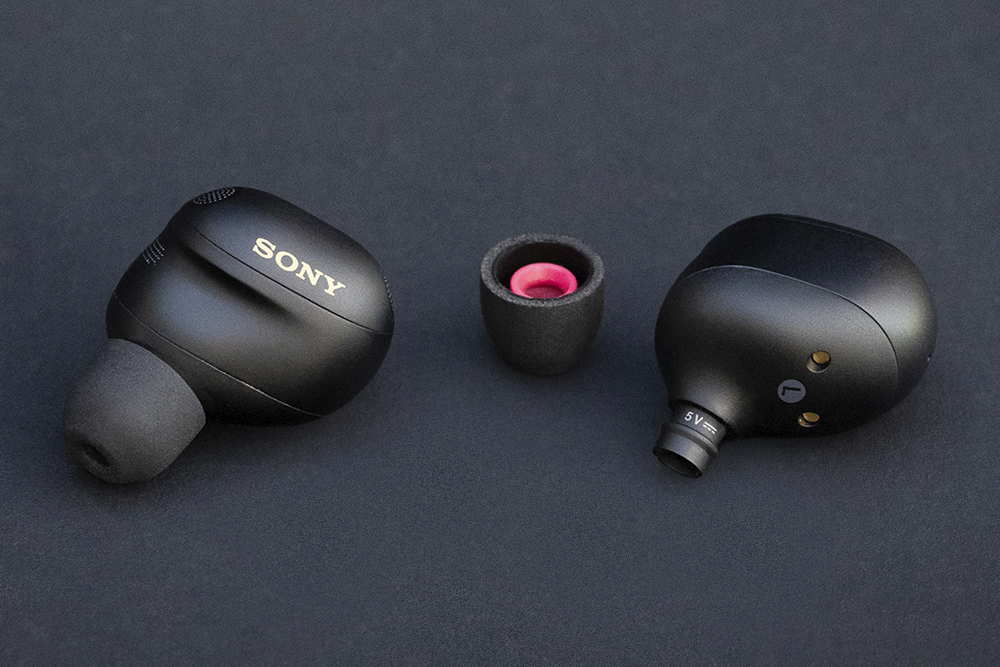
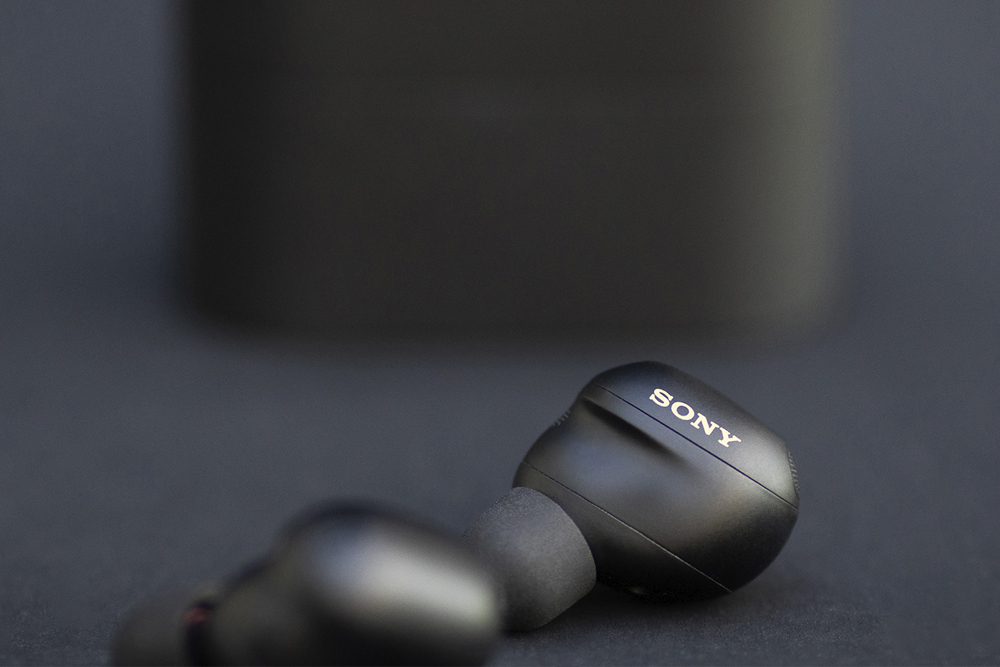
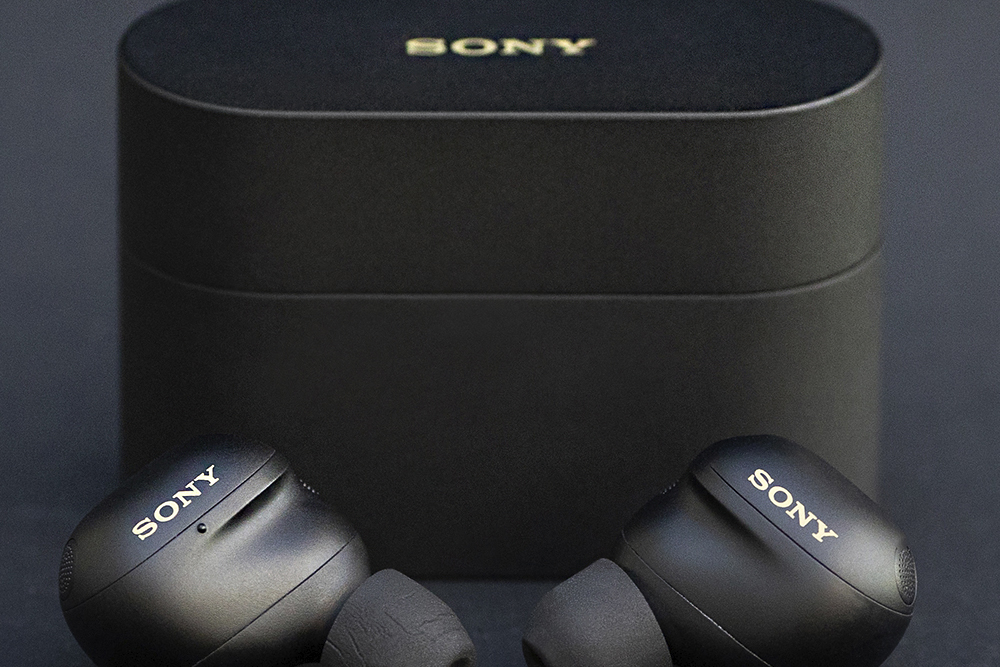
Packaged with the WF‑1000XM6s are a USB‑A‑to‑USB‑C cable and four sets of eartips. Surprisingly, those eartips will make or break the XM6s for you. Unlike most earbuds, which come with silicone eartips, the XM6s’ are foam. These require an extra moment or three when you’re inserting them in your ears, so the foam can compress and then expand again to fill whatever space it can find in your ear canal.
Foam eartips can take a little getting used to. The surface isn’t as smooth as silicone, and it’s an earwax magnet. It’s also entirely possible that you just won’t get a comfortable fit. This is true for all earbuds, of course, but the foam adds a layer of potential discomfort. Everyone’s ears are different, but I have relatively small ear canals, and I was able to get the XM6s to fit securely enough that I didn’t feel like they’d fall out, even with rather vigorous movement (which for me is rarely more than a brisk walk or light hike). Unexpectedly, I needed two different sizes of eartips for the best fit. That’s unique for me.
If you can get a good fit, however, the passive isolation made possible by the foam helps the overall noise-reduction prowess of the XM6s. I spend more time on the noise-canceling performance in the airborne article linked above. The short version: it’s extraordinary.
Use
Sony’s Sound Connect app is well laid out and has lots of features, as you’d expect, given that these are flagship earbuds from a huge company. You can switch from Noise Canceling to Ambient Sound so you can better hear what’s around you. This can be achieved by tapping the left earbud as well. There’s a ten-band equalizer with multiple presets. A Listening Mode feature has an option for Background Music, which makes the music sound like it’s coming from speakers on the other side of the room, as if you’re in a coffee shop. As someone who usually has music playing while working, it’s surprisingly effective to have something going on without being distracting.
Given the fate that befell my XM4s, I’m glad to see multiple battery-saving features on the XM6s. There’s Battery Care, which limits the total charge to 80 percent of the potential maximum to prolong battery life. There’s also Auto Power Save, which disables some features when the battery drops below 20 percent, extending playtime.
Lastly, in a feature I wish more brands would adopt, there’s a little icon under the battery-levels indicator in the app that tells you which Bluetooth codec they’re using. That is, as long as you’re on Android, since iPhones only use AAC.
Sound
Overall, the XM6s have a fairly balanced sound, with a bit of a bass boost. I think most people will find them quite pleasing to listen to.
I started with Pink Floyd’s “Sheep” (Animals, 24‑bit/192kHz ALAC, Sony / Apple Music). The opening Rhodes bounced back and forth out over my shoulders. For highly isolating earbuds, the XM6s have an extremely broad soundstage. There was a good snap to Nick Mason’s drums, but they didn’t overwhelm. The bass (actually played by David Gilmour, not Roger Waters) came through strongly. It didn’t have the definition it had through the AirPods Pro 3 earphones, but it was close. When I turned off the noise canceling, the bass dropped noticeably, which was perhaps more accurate, but given that noise canceling is a huge part of why you’d want these, I can’t expect anyone to buy them and turn it off just to reduce the bass. There’s an EQ if you want to do that.
Up next was “Slow Burn” from Kasey Musgrave’s Golden Hour (24/96 ALAC, MCA / Apple Music). The guitars all had a warm depth to their tone, and the bass drum had a deep thump. The strums were clear but never piercing. Musgrave’s voice soared over the many instruments, even as their layers interweaved toward the end of the song.
Next were the mellow vibes of Olivia Dean’s “So Easy (To Fall in Love)” (The Art of Loving, 24/44.1 ALAC, Capitol / Apple Music). Dean’s smooth voice balanced nicely with the drums and various instruments. The cymbals had a clear timbre but were never biting or overly crystalline. I’ve heard more airiness through some earphones, but the XM6s’ treble sounded accurate and not overly boosted, which can be tiring.
Comparisons
In the Apple and Bose reviews, I compared both of them to the Sonys extensively. The short version is that the AirPod Pro 3s have better-controlled bass and are a bit more “fun,” while the Sonys, no slouch when bass is concerned, are a bit better balanced. The Boses trail behind a bit, but not as much as with earlier Bose earbuds. You can read the specifics in both of the other reviews.
For this review, I brought two other earbuds to compare. Yep, six weeks of traveling, carrying around five pairs of earbuds (and cameras and clothes and stuff too, of course). I brought my battery-ruined WF‑1000XM4 and 2023’s Bowers & Wilkins Pi7 S2 earphones. My reasoning was that I was looking for new daily-driver earbuds, and it seemed logical to compare to the ones I’m replacing as well as my favorite-sounding true wireless earbuds from the last few years.
Starting with the XM4s, Chvrches was the obvious choice, as I’ve probably listened to them the most with these earbuds. “Such Great Heights" (16/48 ALAC, 20th Century / Apple Music) is a single from the Tell Me Lies TV show and a cover from the legendary band the Postal Service’s sole album, Give Up. The XM6s were definitely better balanced, with much better midrange and treble. However, the XM4s had more, and better-controlled, bass. Hearing the XM4s again for the first time in months, I found it obvious why I liked them. Using the app’s EQ, I could get the XM6s to mimic the 4s’ bass pretty closely (by turning it up, of course). Without question, though, the XM6s are the superior earbuds. Even with just this short bit of testing, I was already getting a low-battery warning on the XM4s. Goodbye, old friends.
The Pi7 S2s aren’t really competition, not least because they’re three years old at this point. That, and their noise canceling can’t hold a candle to either of the Sonys. However, their dual-driver design sounds fantastic. I wish B&W hadn’t gone to a single driver with the Pi8 earphones. For these, I digitally dusted off the ultimate audio test track, Tracy Chapman’s “Fast Car” (Tracy Chapman, 16/44.1 ALAC, Elektra / Apple Music). Both earbuds have boosted bass. The Pi7 S2s’ bass went a little deeper, but they were close. The most noticeable difference was in the treble. Through the B&Ws, the hi-hat, cymbals, and plucks on the acoustic guitar all sounded cleaner, clearer, and more delicate. I’m a sucker for good bass, of course, but it was how the Pi7 S2s handled treble that sold me on them. The Sony XM6s are better earbuds overall, and honestly better-balanced in terms of sound too, but I really loved the sound of the Pi7 S2s. Too bad their noise canceling wasn’t better—and they weren’t three years old. That’s how old my XM4s were when they died. New anxiety unlocked!
Conclusion
As of this writing, I’ve been traveling for a little over a month and, confession time, I’ve been mostly listening to the Apple AirPods Pro 3s. Their sound is just so fun, and they’re easier/faster to put in and take out compared to the rather fiddly Sonys. However, in that month I’ve nearly lost an Apple earbud three different times, including one where it flat-out leapt toward an open grate. As I assumed in my initial review, it’s only a matter of time. I just don’t feel comfortable with them long-term, not least because in the box with this review sample was a return label.
So I have two conclusions here. The first is for you. If you’re looking for the best noise-canceling earbuds, choose these Sonys for sure. Their noise-reducing powers are remarkable, assuming you can get a good and comfortable fit. If you have an iPhone, the AirPods Pro 3s are fantastic. Their noise canceling is only slightly “worse” (it’s still excellent), and I think their sound is a bit more fun than that of the Sonys. If you have an Android phone, however, the Apple ’buds aren’t worth it. You give up too much. In either case, you’re going to have to be extra careful with them, as anytime anything gets close to your ears, the AirPods seem like they are compelled, as if by magic, to free themselves from your tyrannical ownership.
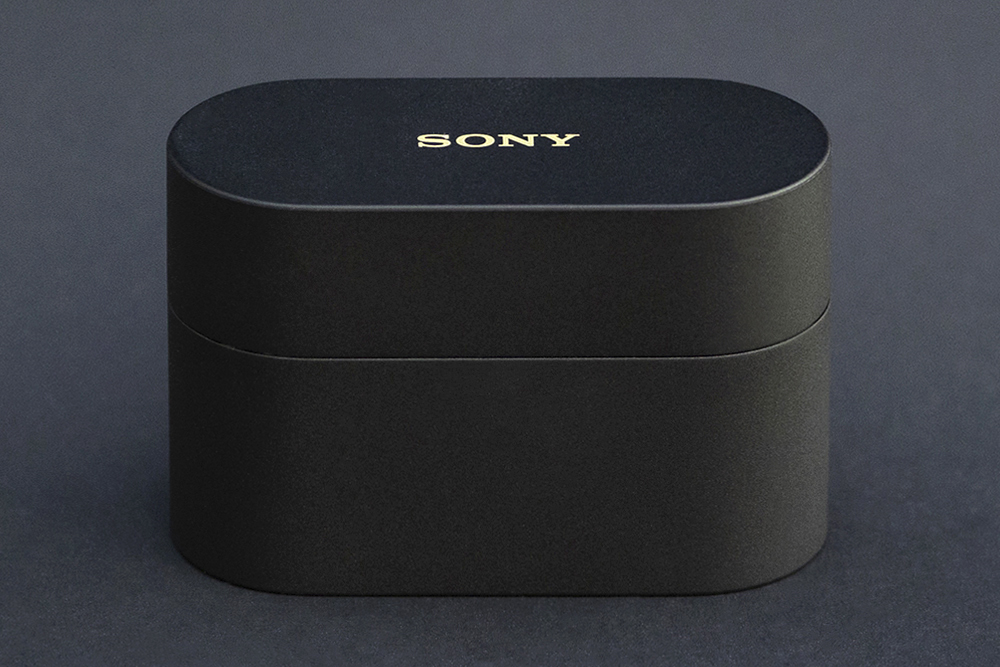
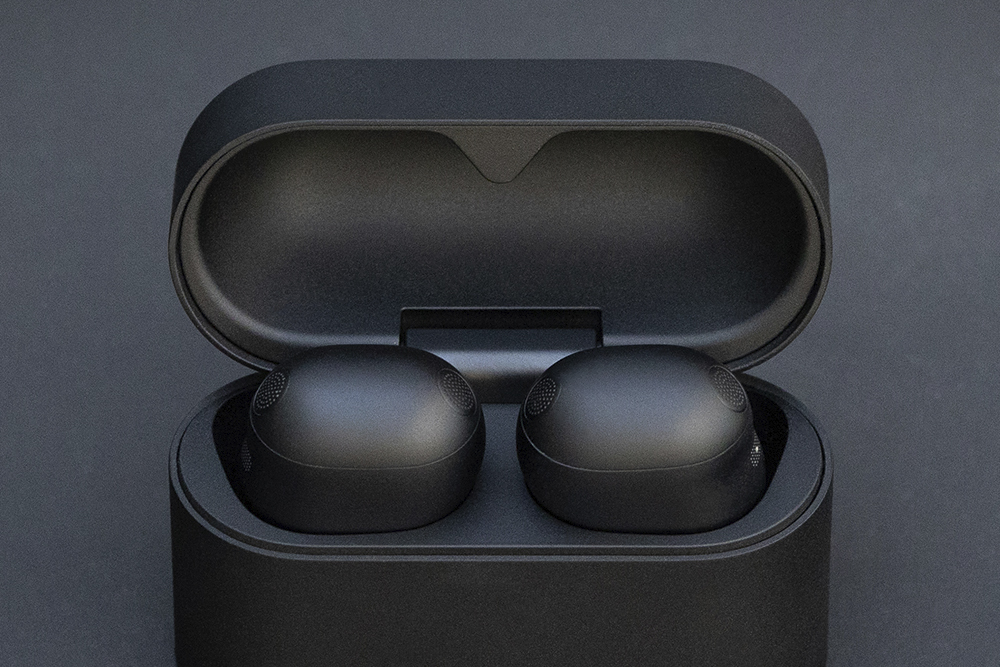
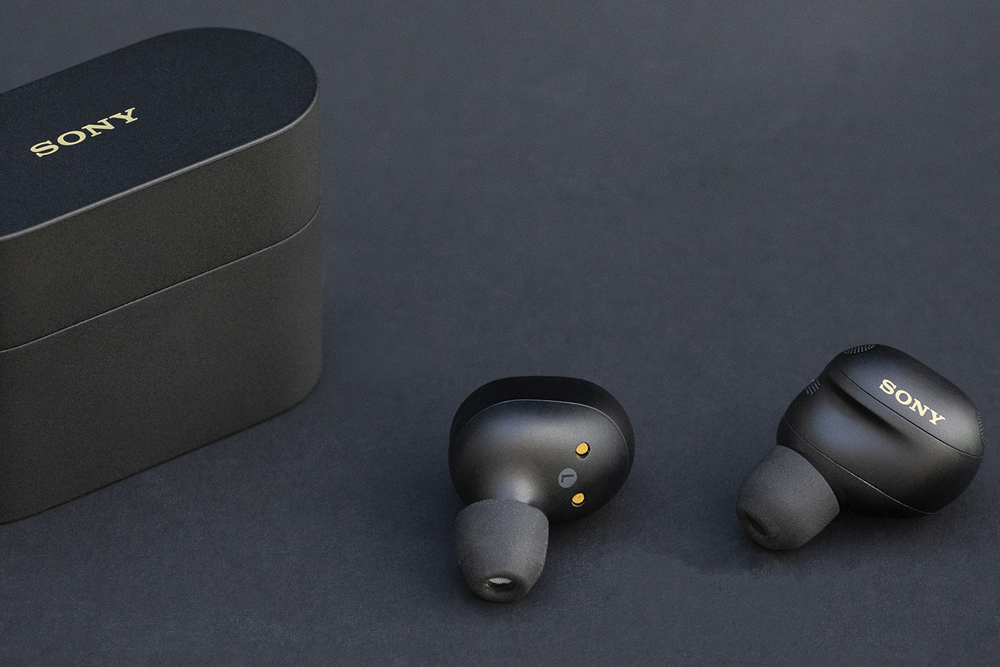
The other conclusion is for me. I tend to settle on one pair of earbuds and use them until they break or get stolen. Sound is the priority, of course, but they need to have decent noise canceling and comfort as well. So basically, the same things most people are looking for in “daily-driver” earbuds. The XM4s were the most recent in a long line of beloved earbuds. Are the XM6s the long-looked-for replacement? Yes, but with some caveats. I wish the case were smaller. The XM4 case was tiny and fit so easily in my pocket with my wallet. I like the sound of the XM6s, especially with a few EQ tweaks, but I like the sound of the AirPod Pro 3s a little better.
So whereas the XM4s were unquestionably my go-to true wireless earbuds right from the start, the XM6s are a competent replacement. In the back of my mind, I’ll still be looking for something new. The hunt for perfection continues. Then again, that’s exactly how I felt when I transitioned from the wired Bowers & Wilkins C5 S2s to the Sonys. Hmmm, maybe the issue is me? Big if true.
. . . Geoffrey Morrison
Associated Equipment
- Smartphone: Google Pixel 9 Pro
- PC: iBuyPower Windows 11
- Earphones: Apple AirPods Pro 3, Bose QuietComfort Ultra Earbuds (2nd Gen), Sony WF‑1000MX4, Bowers & Wilkins Pi7 S2
Sony WF‑1000XM6 earphones
Price: US$329.99, CA$429.95, £249, €299.99
Warranty: One year
Sony Electronics
16530 Via Esprillo
San Diego, CA 92127
Phone: 1-800-646-7669
Website: www.sony.com